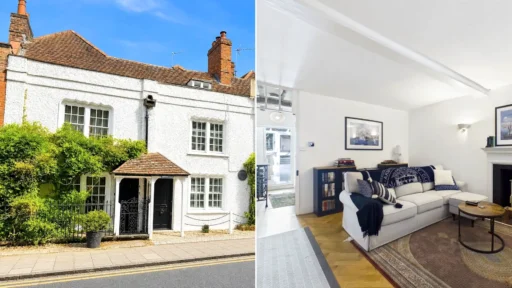
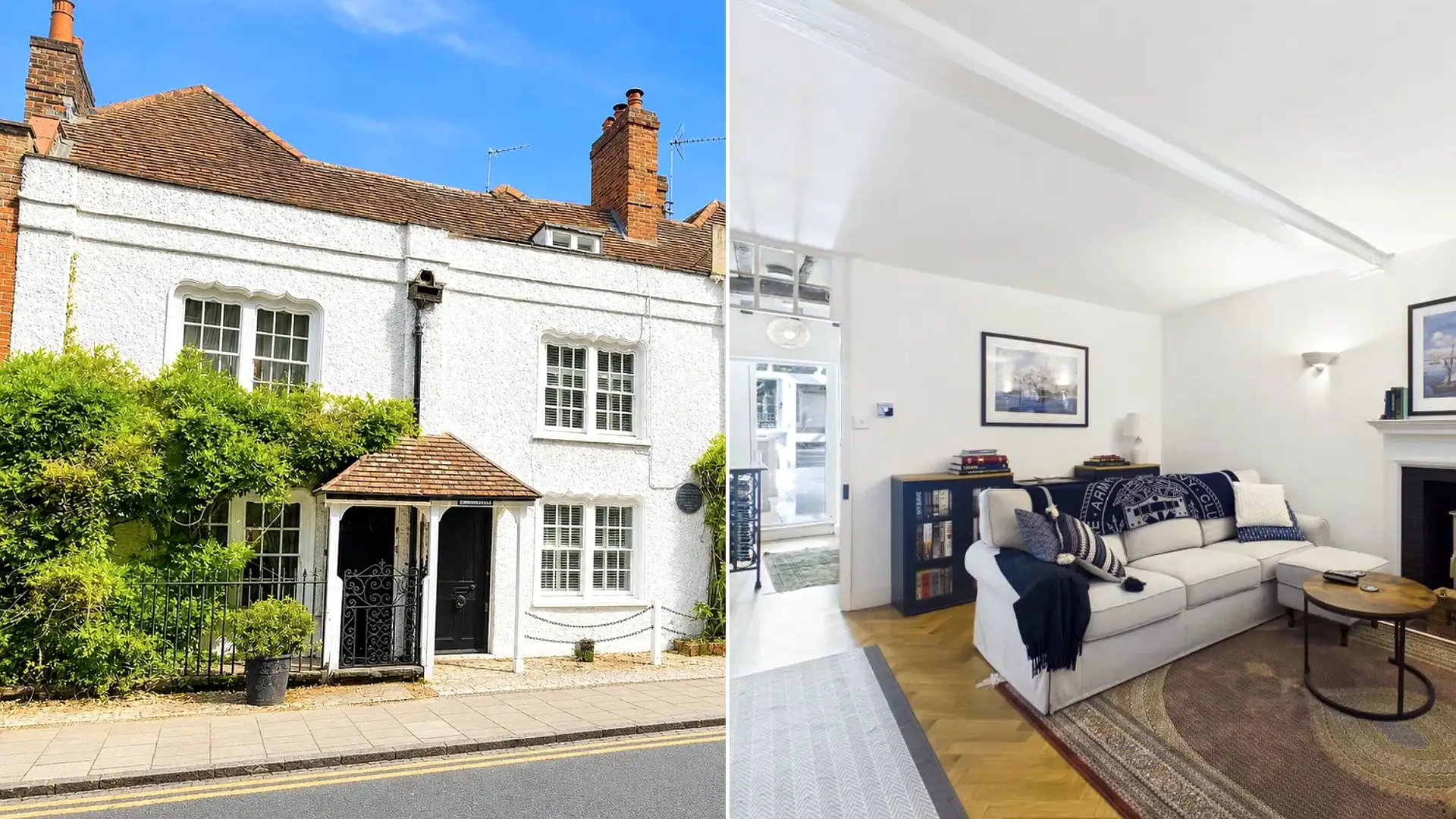

A Grade-II listed townhouse where Mary Shelley completed her world-famous novel Frankenstein has hit the market for £800,000.
The three-bedroom property in Marlow, Buckinghamshire, was once part of the home shared by the legendary author and her poet husband, Percy Bysshe Shelley.
The couple moved into Albion House in March 1817, shortly after marrying, and remained there for almost a year.
READ MORE: Helen Mirren’s wedding church for sale at £80,000 – could become a museum
Mary, then just 19, had begun writing Frankenstein during a famously gloomy summer in Switzerland the previous year, as reported by Luxury Property News.
She completed the novel while living in Marlow, before it was published anonymously on 1 January 1818.
The house was also a creative retreat for Percy, who worked on some of his best-known poetry during their stay.
But life wasn’t entirely idyllic.
Despite its picturesque surroundings, Mary reportedly found the property cold and damp, while the couple also struggled financially.
The historic building was subsequently divided into four homes, including the three-storey Shelley Cottage, which is now being sold by Bonners & Babingtons.
Dating in part to the 18th century, the property retains exposed wooden beams, fireplaces and a distinctive white exterior.
It offers approximately 1,177 sq ft of accommodation, with three bedrooms, a modern kitchen and an enclosed courtyard garden.
The chain-free home, on West Street, has had its asking price reduced and is now available for offers over £800,000.
This handsome white townhouse in Marlow, Buckinghamshire, is on the market for offers over £800,000, but its literary pedigree is what makes it extraordinary.
The Grade-II listed building was once home to Mary Shelley, who completed her gothic masterpiece Frankenstein while living here with her husband, the poet Percy Bysshe Shelley.
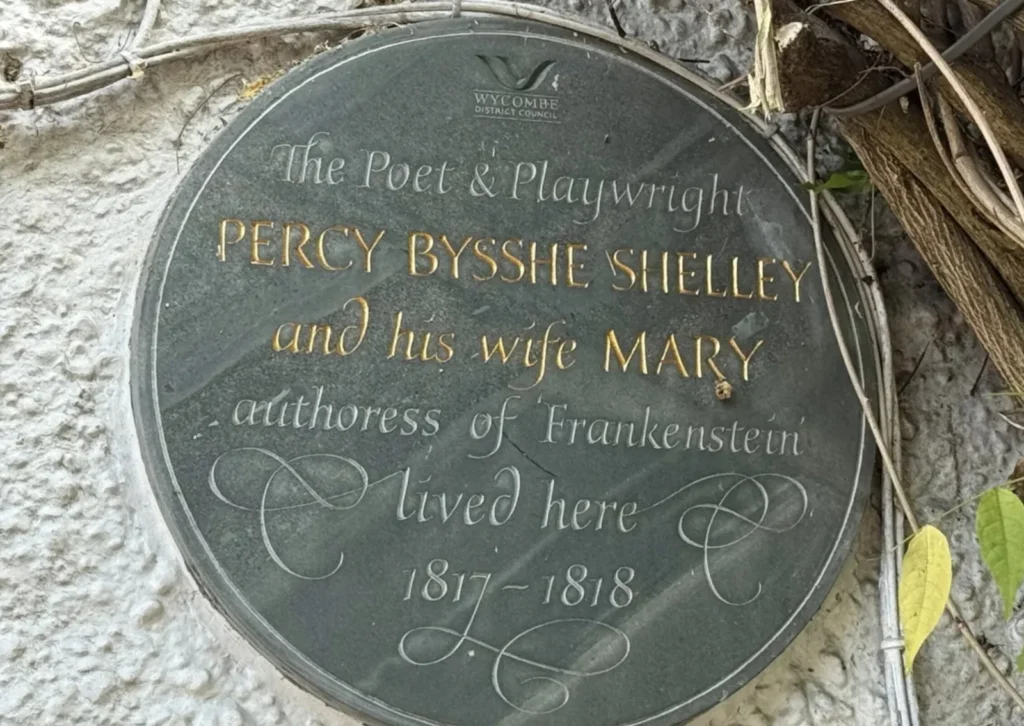
A plaque outside the property commemorates the famous couple, who lived here between 1817 and 1818.
Mary had begun Frankenstein during a visit to Switzerland in 1816, but completed the manuscript after moving to Marlow. The novel, about a scientist who creates a living being, was published anonymously in January 1818.
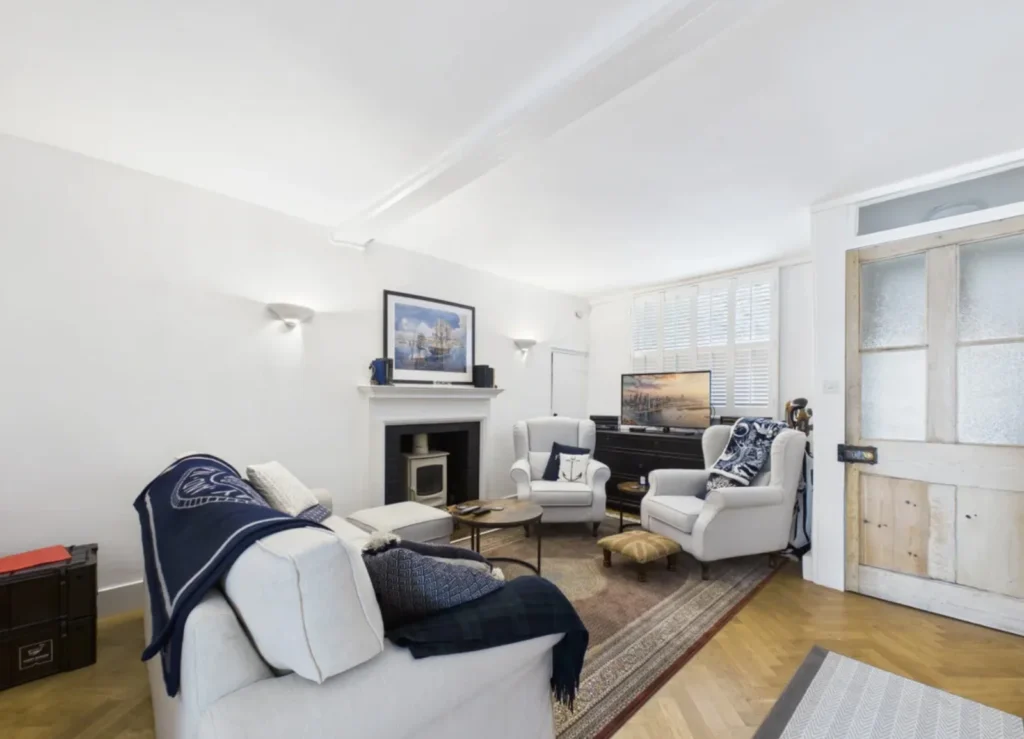
Behind the historic exterior is a bright sitting room with white armchairs, a sofa, wooden flooring and a fireplace.
The three-storey home now offers a very different standard of comfort from the house the Shelleys knew more than 200 years ago.
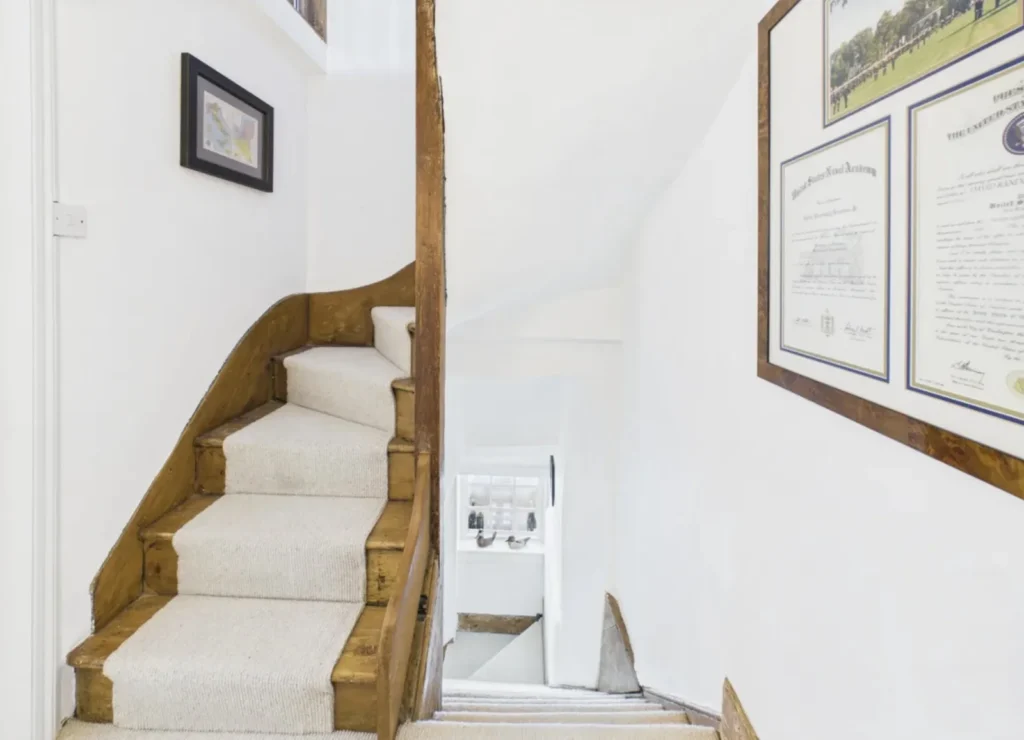
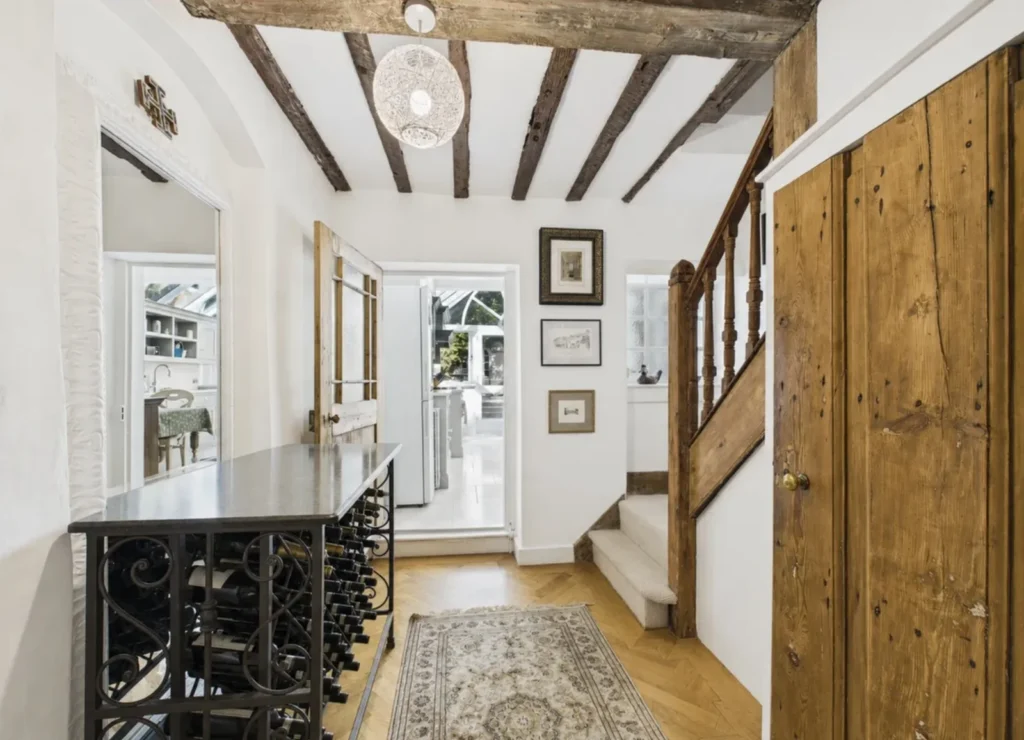
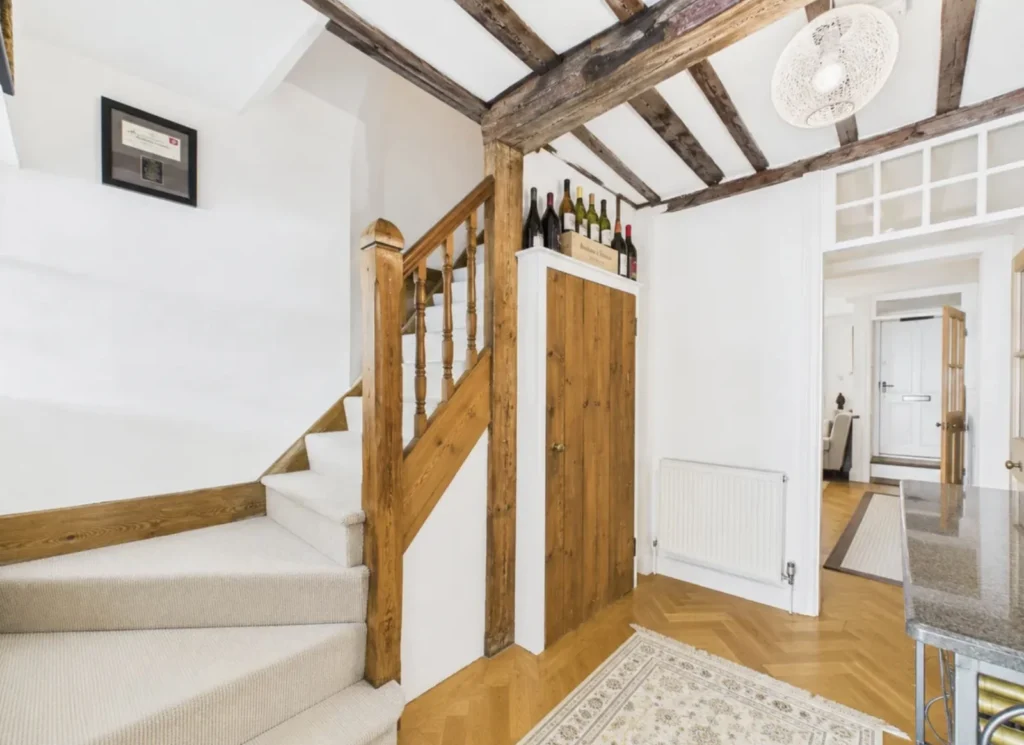
Exposed wooden beams and a staircase hint at the property’s considerable age.
According to the estate agent, the site may originally have been occupied by a late 16th-century house, before being rebuilt during the 18th century. The building was eventually divided into four separate homes.
The attractive hallway features herringbone-style wooden flooring, rustic doors and a wine rack tucked beneath a counter.
When the Shelleys moved into the original Albion House in March 1817, their household also included Mary’s stepsister Claire Clairmont, children and servants.
The property was considerably larger before its later subdivision.
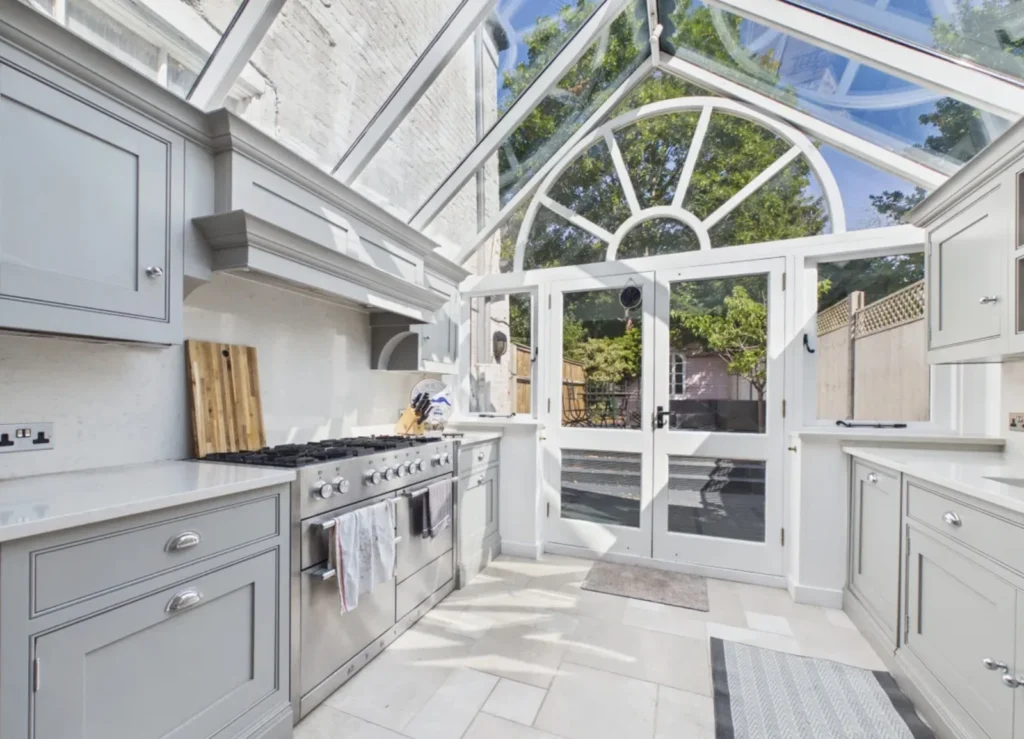
The kitchen is a far cry from the facilities available during the Shelleys’ time, boasting grey cabinetry, a substantial range cooker and a dining table.
A glazed roof floods the room with natural light, creating an airy contrast to the period features found elsewhere in the historic property.
French doors beneath an elegant glass roof lead directly from the kitchen into the private courtyard.
During their time in Marlow, Mary and Percy moved in a literary circle that included Leigh Hunt. Percy was also writing prolifically, including the long political poem later published as The Revolt of Islam.
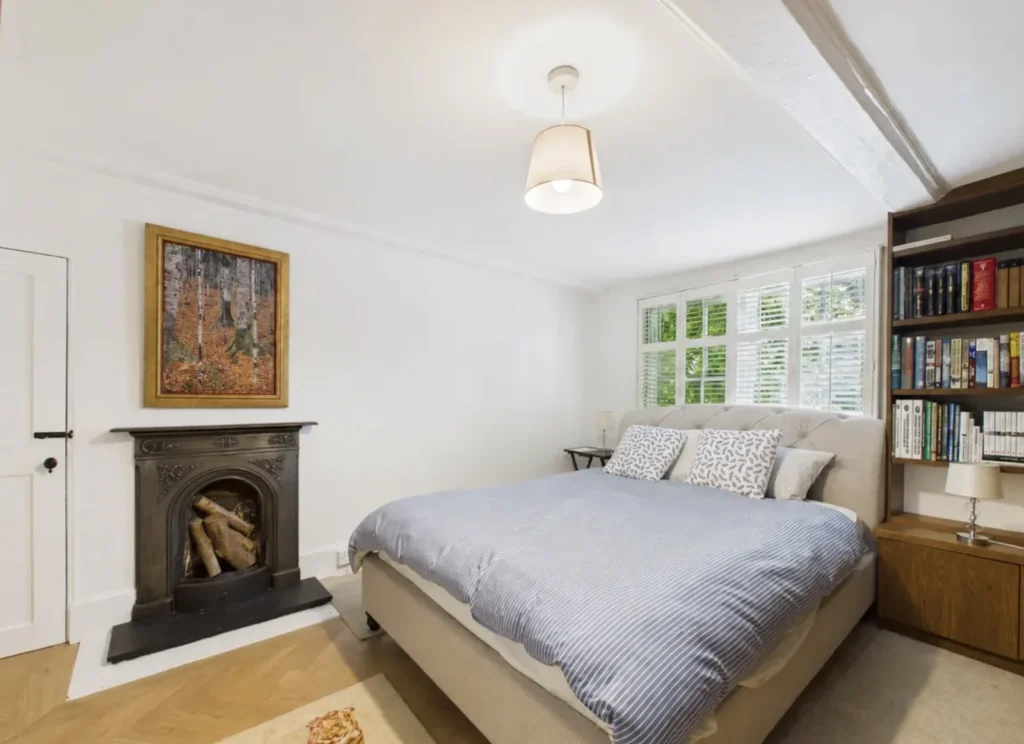
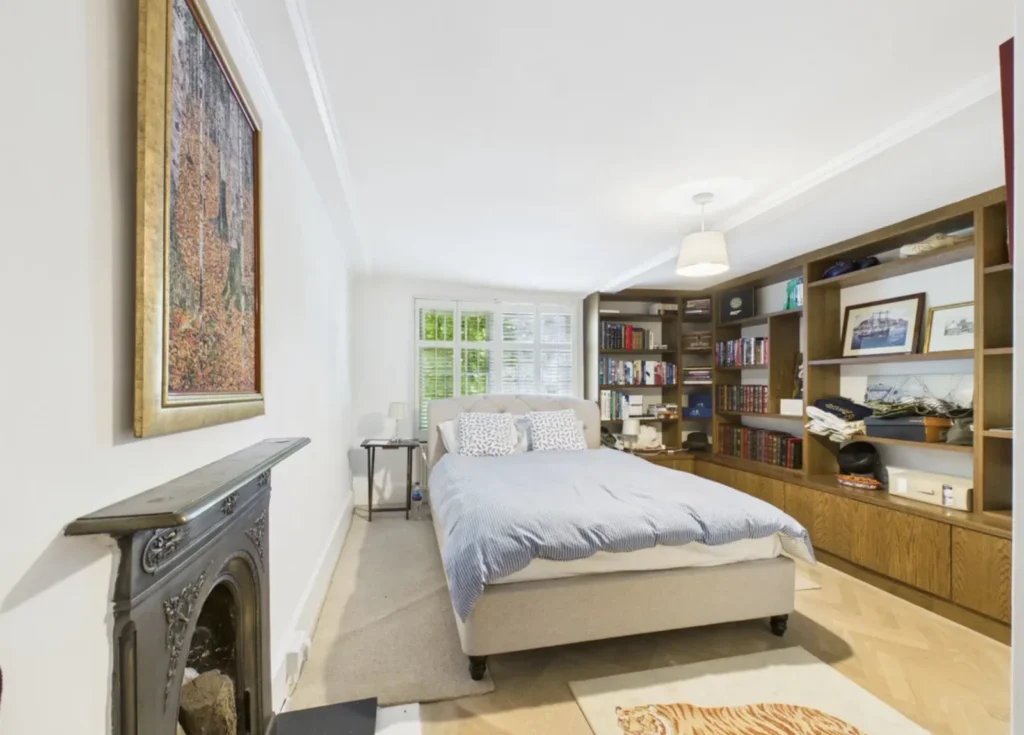
One of the bedrooms features an ornate cast-iron fireplace, shuttered windows and a large double bed.
Although the interiors have been modernised, details like these evoke the property’s earlier life. During the couple’s stay, Mary gave birth to their daughter Clara in September 1817.
Built-in bookshelves, framed artwork and a distinctive tiger-patterned rug give this bedroom a literary feel.
When Frankenstein first appeared in January 1818, Mary’s name was absent from its title page. The novel would go on to inspire generations of writers, filmmakers and storytellers.
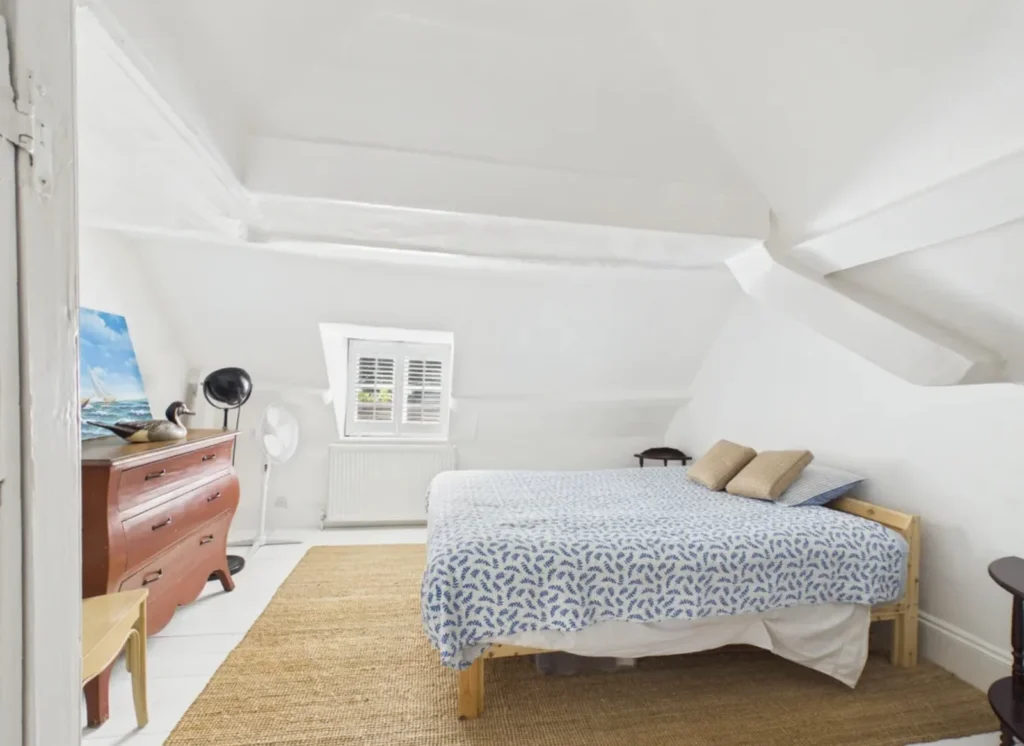
A further bedroom is tucked beneath the sloping roof, with white-painted beams, a small shuttered window and a cosy double bed.
The Shelleys’ stay in Marlow proved short-lived. They left England for Italy in March 1818, just months after Frankenstein was published.
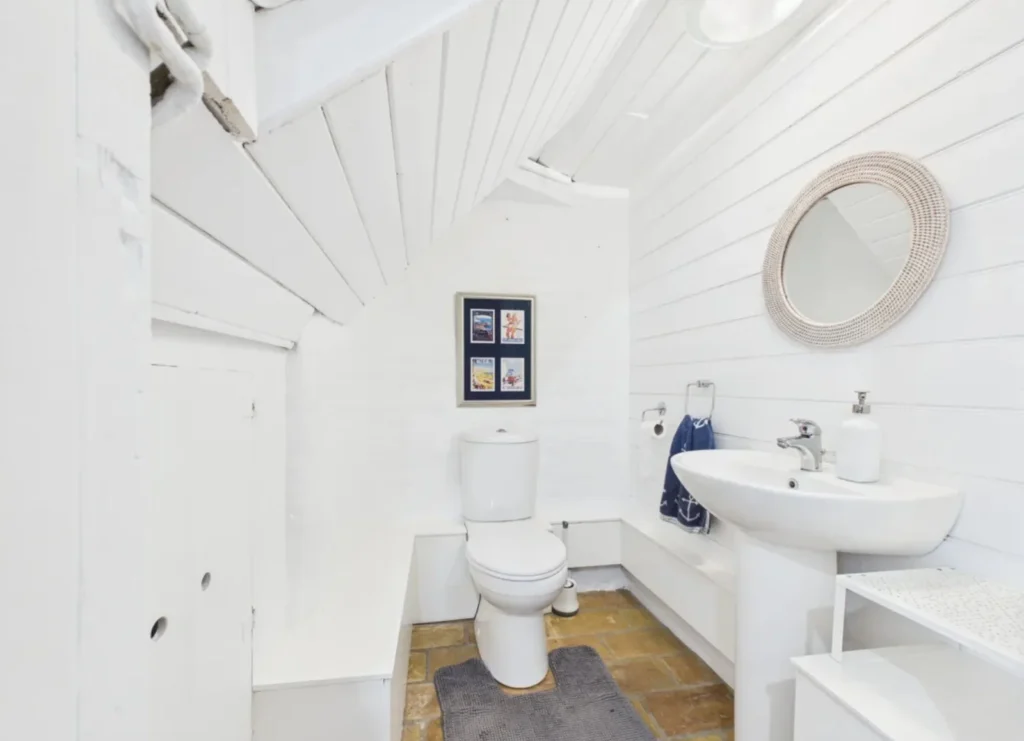
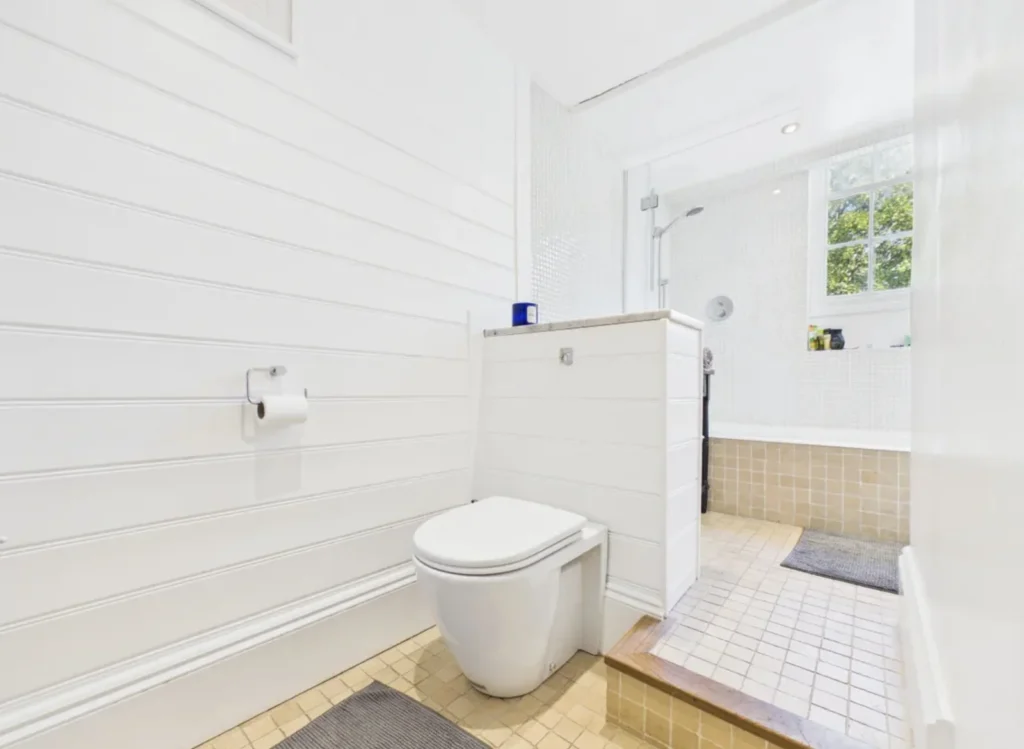
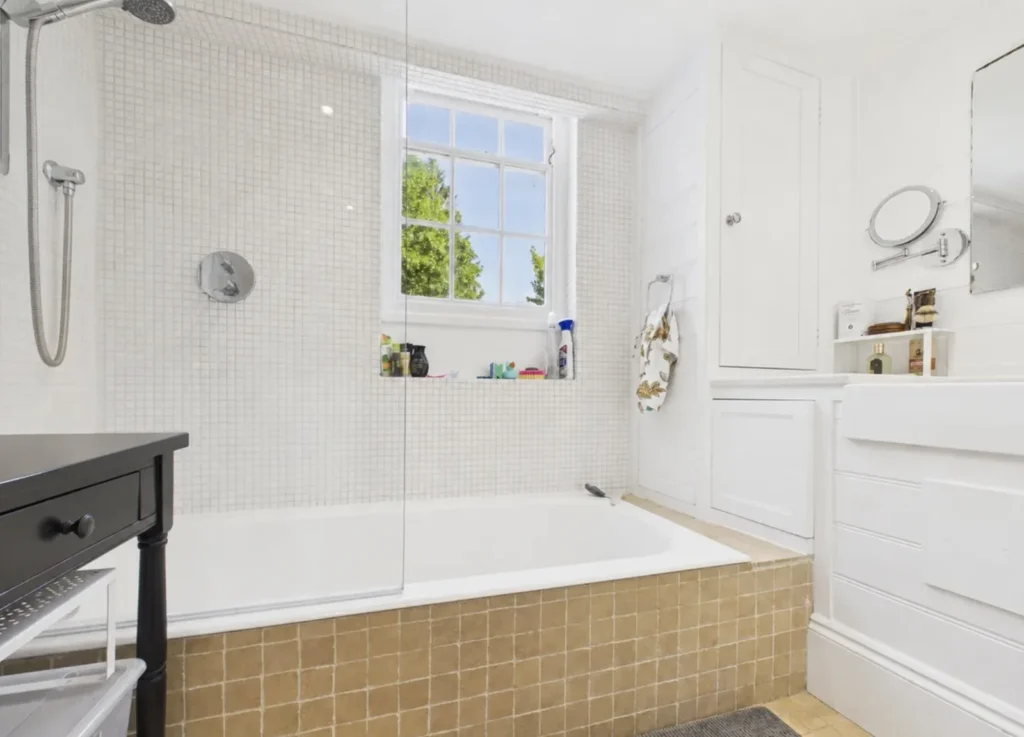
The bathroom reveals a fitted bathtub with overhead shower, white mosaic wall tiles and a traditional sash-style window.
Shelley Cottage offers around 1,177 sq ft of accommodation across three floors, with two generous double bedrooms and a further single bedroom suitable for a study or guest room.
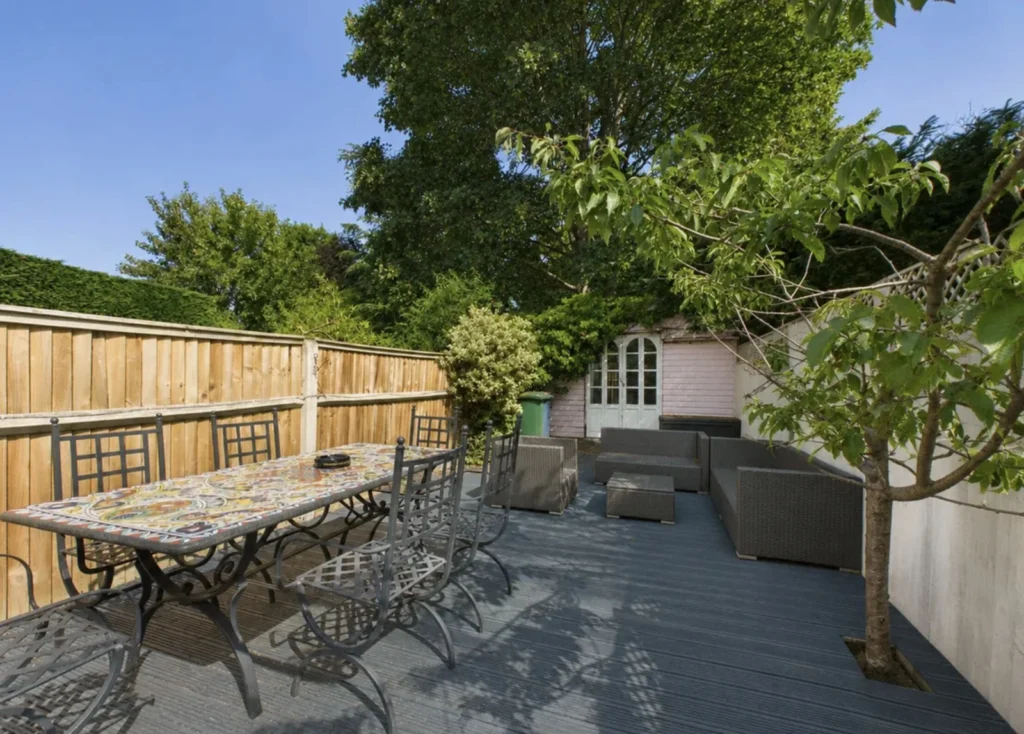
At the rear, a private courtyard features timber decking, outdoor dining furniture and seating beneath mature trees.
A timber outbuilding provides additional storage, while the town centre and River Thames are close by.
READ MORE: Tea shop where ‘Pooh was first sketched’ on sale at REDUCED £600,000